

Blog Post
We Didn't Start with the Tech: Building the Fifth Generation of Concentriq Alongside Pathologists
Vaughn Spurrier, AI Research Team Lead & Amanda Coble, Sr. Director of Product
13 Aug 2026

When we set out to build the Fifth Generation of Concentriq, we didn't start by asking what AI could do. AI isn't automatically better, and building it for its own sake doesn't make anyone's day easier.
So we asked pathologists and lab directors a different question: what's slowing you down? The answer wasn't slide review, it was everything around it: manual steps, friction, and extra clicks. We focused on removing those barriers, so pathologists can spend their time on pathology instead of on the steps around it.
The Fifth Generation of Concentriq was built, tested, and refined over months of working sessions with pathologists and lab directors who are actually reviewing cases day in and day out. Here's what they told us, and how we built intelligent navigation, one of the features core to the Fifth Generation of Concentriq AP.1
From Pathologist Problem to Production
Immersion: Experience what a pathologist experiences
We began by going to where pathologists work — reference labs, hospitals, academic medical centers, and more. Through site visits, direct conversations, and close observation, we learned where their tools supported the work and where friction remained.
Dermatopathologists made one challenge especially clear: digital pathology had to match the speed of a workflow built on years of microscope muscle memory. Repositioning a glass slide by hand is instant; click-and-drag navigation on screen was not. Experiencing that gap firsthand led us to prioritize a specific problem for dermatopathology: faster navigation across fragmented tissue.
”One of the biggest friction points I hear about constantly is folks that have built up 20 years of muscle memory into their glass microscopes don't want to be disrupted moving into a digital workflow. And so one of the areas that we've focused on for this fifth gen launch is to help clinicians interact with digital pathology in ways that are even more delightful than how nice it feels to be moving a glass slide around a microscope stage."
In a routine digital case, tissue on a whole slide image may be scattered across many small, unevenly placed fragments. Even with specialized peripherals that carry microscope muscle memory into the digital workflow, finding every fragment can require panning before review can begin. Manual navigation may not be the most visible complaint, but it is often where the minutes go.
That recurring workflow problem suggested a role for computer vision: detect the tissue fragments and guide the pathologist from one to the next. We call the feature intelligent navigation. But software that helps determine where a pathologist looks next cannot rely on 'trust us, the model is right' — it has to earn that trust.
Ideation: Start with a customer's workflow, not a model's capability
Detecting tissue is a capability. Knowing what a pathologist needs to happen next is a workflow. The fragment problem gave us the first half of the feature: queue the tissue and move the pathologist from one piece to the next in a sensible order, instead of panning across empty background. A model that finds tissue can do that much.
The second half came from watching dermatopathologists work. They're trained to read tissue with the epidermal surface aligned along the top of the field of view. Nobody raised that as a software problem — it's just how they were taught to look. We heard it at lab after lab.
But guiding someone to a fragment that's rotated the wrong way isn't much help, so the two became one feature: orient the tissue, then guide the review. Pathologists had described what that could feel like for years. If the system already knew where the tissue was and how it should be oriented, review would feel closer to following a flight path than searching a map.
For us, ideation is less about brainstorming and more about listening for two things at once — the work pathologists want to stop doing, and the habits they've built over a career that software should accommodate rather than retrain.
Development: Build, test, and validate
Once we had the idea, we waited until the computer vision and product work were ready to support it, and then we started building. First, a product designer created a minimal working prototype and clickable mocks. This enabled us to test and get user feedback early and often.
Pathologists reacted to the in-progress interaction model, and we iterated on it repeatedly— the tissue fragment review order and the magnification level both came out of specific pathologist feedback. The bar wasn't whether they could use it. It was whether it made the work meaningfully easier — enough that they didn't want to give it back. Once the model cleared that bar, we built it out properly, including a graceful fallback for when the system isn't confident or is running slow.
From there, select pathologist partners got hands-on access in their own environments. Behind that, validation across stains, specimens, and scanner vendors, plus formal verification and risk analysis, is what earns a pathologist's confidence: the same behavior, slide after slide.
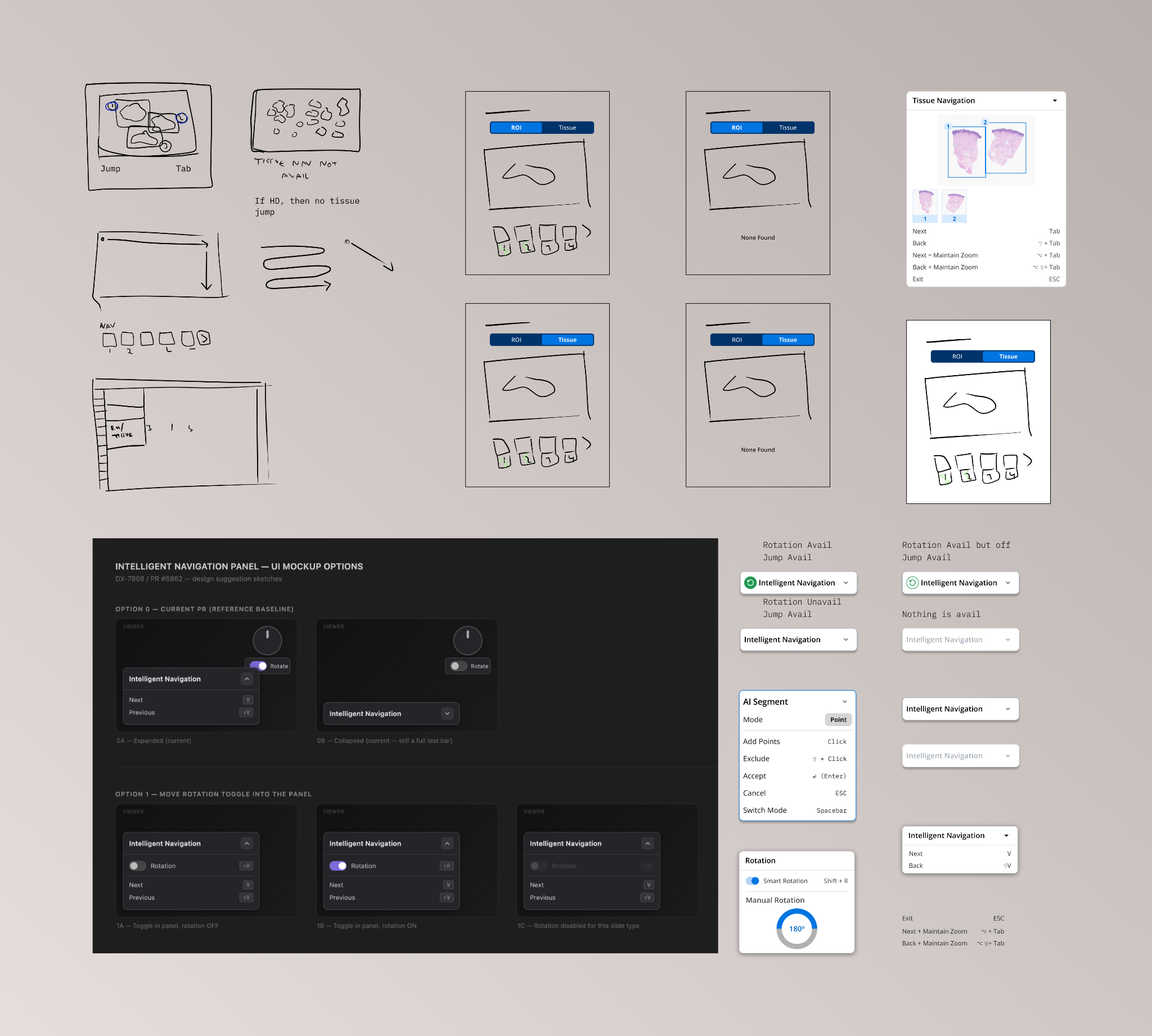
Early sketches and UI mock options for intelligent navigation, exploring toggle placement and behavior across different rotation and availability states.
Production feedback: Release is the middle of the process
Intelligent navigation shipped for the first time as part of Concentriq Fifth Generation — the first release of the Fifth Generation of Concentriq — but the feedback loop doesn't stop here. Once a feature is in daily use across thousands of slides and a large pathologist workforce, we continue to learn from customer conversations and patterns of product use — where the experience saves time, where friction remains, and what we should improve next. Those findings feed directly into future releases.
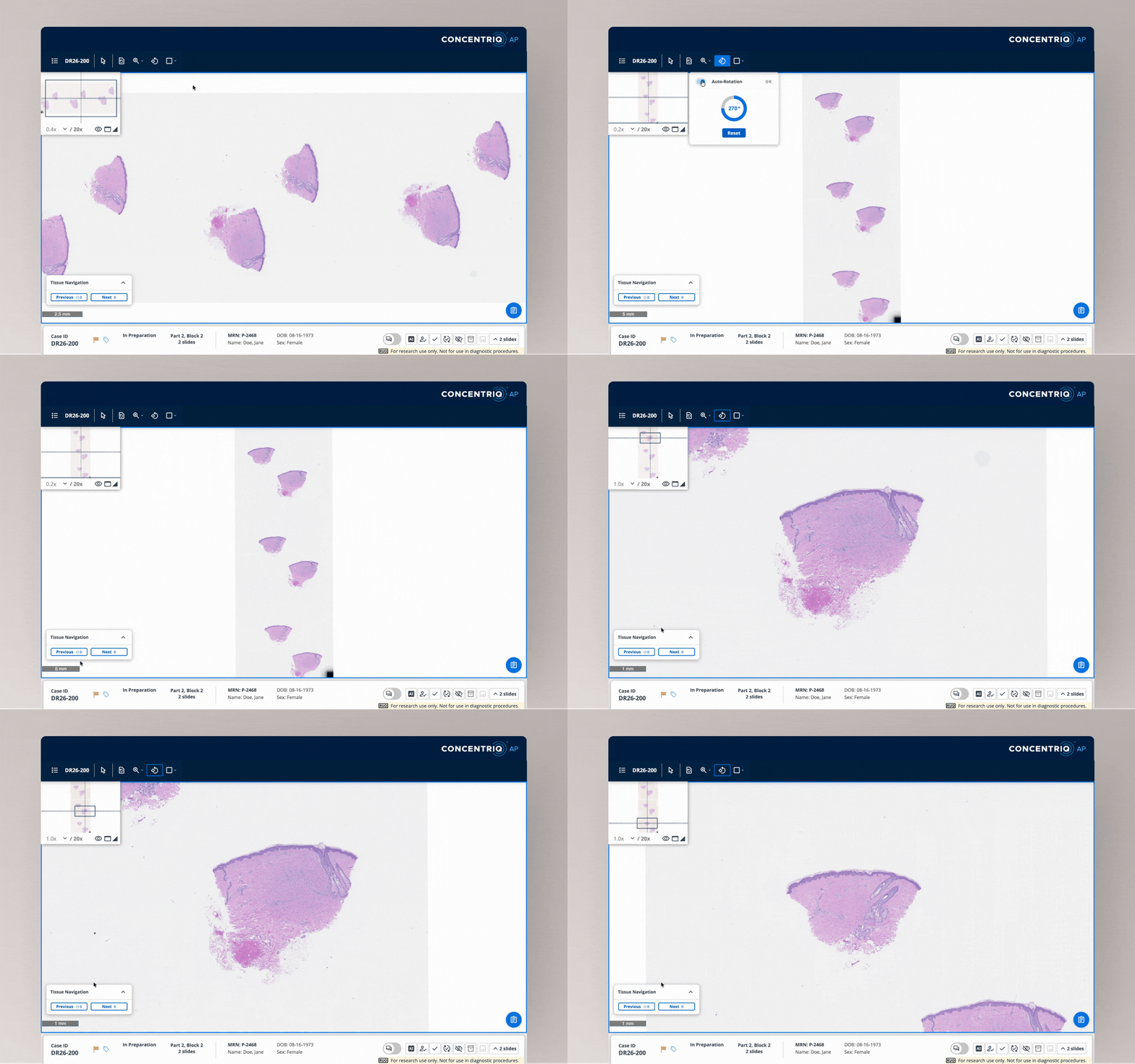
Labs adopt new technology on their own timelines, so we meet them where they are. If a customer would rather keep their current workflow in place for now, we can disable intelligent navigation for their environment. We're confident they'll love what we've built, but they get to decide when they're ready for it.
The Same Discipline, Applied to Everything Else We Heard
Intelligent navigation takes the stage in this post, but the same feedback-to-build discipline shaped other Fifth Generation product features, including next-gen worklists and optimized image lifecycle management.
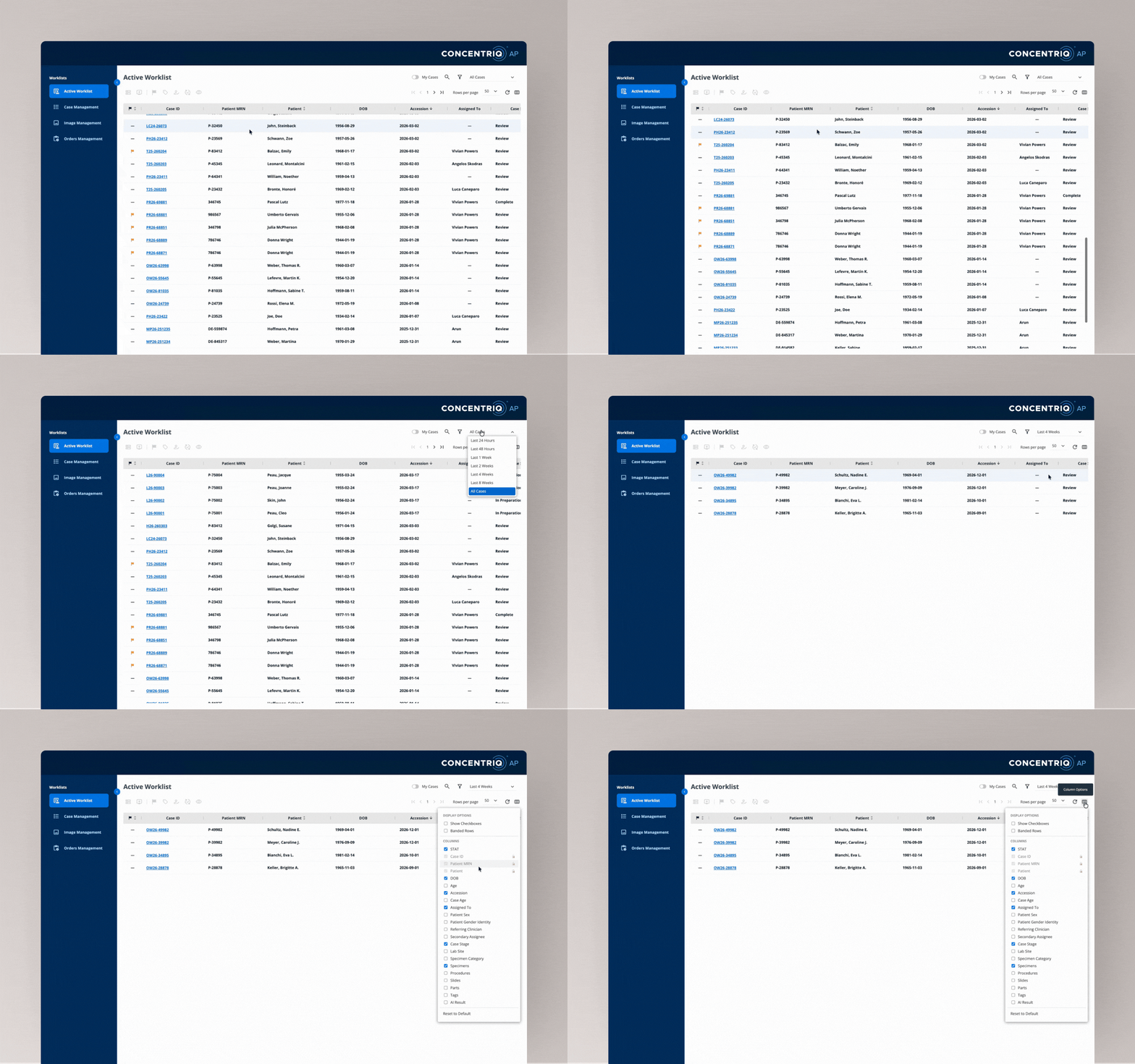
Next-gen worklists came from customers telling us that worklists needed to move at the speed and scale they do. They needed sorting and filtering that didn't reset every session, and consistency across every worklist a pathologist or lab technician touches. The updated Active Worklist for pathologists, and the Case Management and Image Management worklists for lab technicians, now hold that same standard everywhere they work.
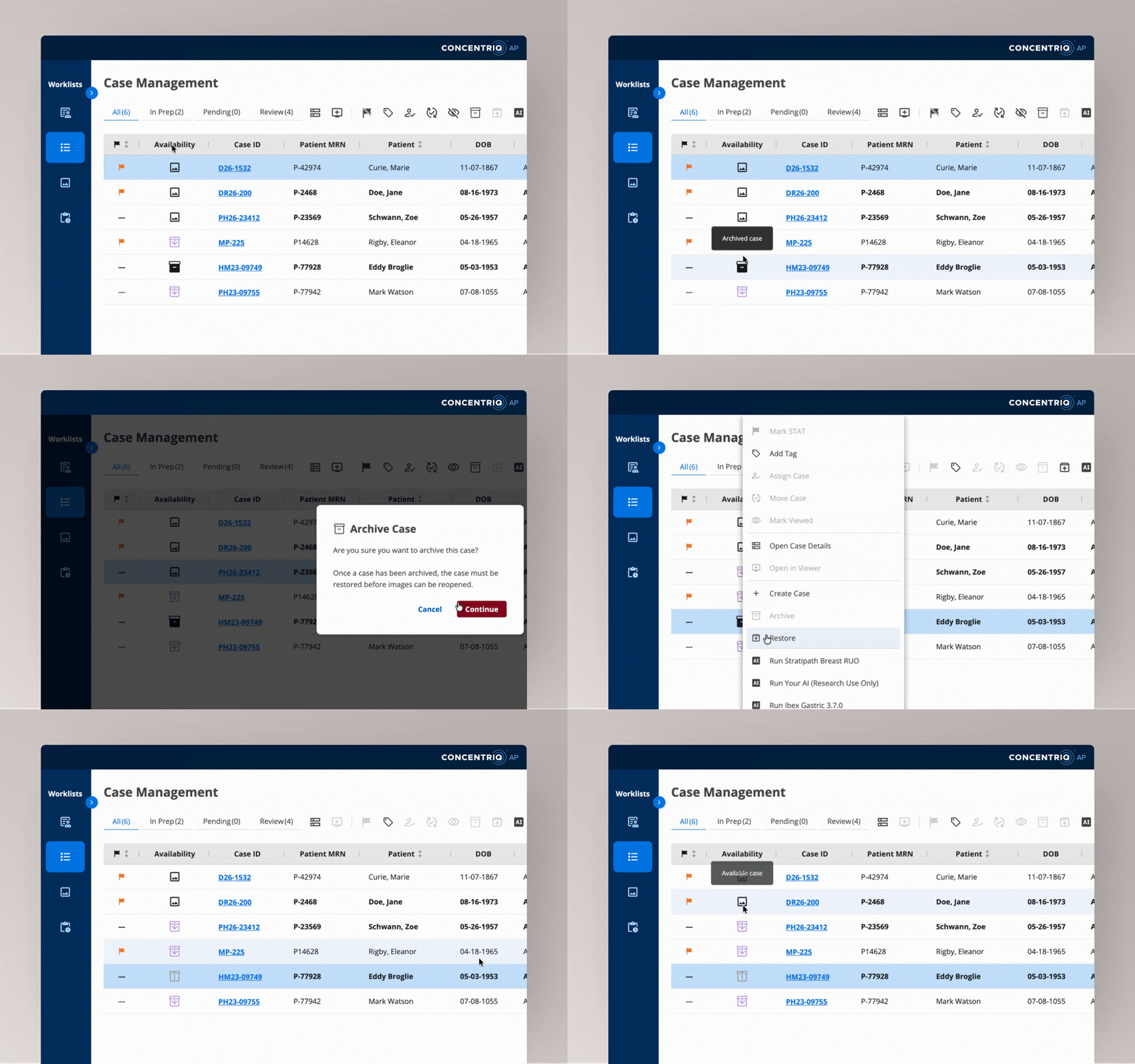
Automatic archiving, part of optimized image lifecycle management, came from customers describing the kind of system they needed as image volumes grow: storage that manages its own lifecycle, moving images to lower-cost tiers as they age, without someone manually managing the handoffs.
"We've had a lot of really amazing positive feedback. At a recent US based pathology conference, we actually had folks saying things like, Proscia is the only AI company that gets it. And I think the reason folks are so excited is because our development strategy partners with pathologists to create tools that we know they'll be excited to use. And instead of dictating a new tool onto them, we're partnering to co-develop things that we know are going to be delightful."
Why We're Telling You This: We Aren't Done Listening
None of this happened because we speculated about what pathology labs might want. It happened because customers showed us where the work was breaking down, tested what we built, and gave us the feedback we needed to refine. That's the same discipline we started with: not asking what AI could do, but what would actually make a pathologist's day better. It's also why AI in Concentriq isn't bolted on — it's core to the platform.
Dr. Derek Welch, President and Chief Medical Officer at PathGroup, put it simply: “Fifth Generation applies AI in an entirely new way, removing the invisible labor that surrounds case review so pathologists can spend more time on the decisions that only they can make."
Fifth Generation is the result of listening, building, and listening again. The pathologists who use Concentriq shaped it, and they'll shape what comes next.
If this blog resonates, our on-demand webinar walks through everything Fifth Generation brings to Concentriq. Watch on demand →
1Concentriq AP is for research use only. Not for use in diagnostic procedures.